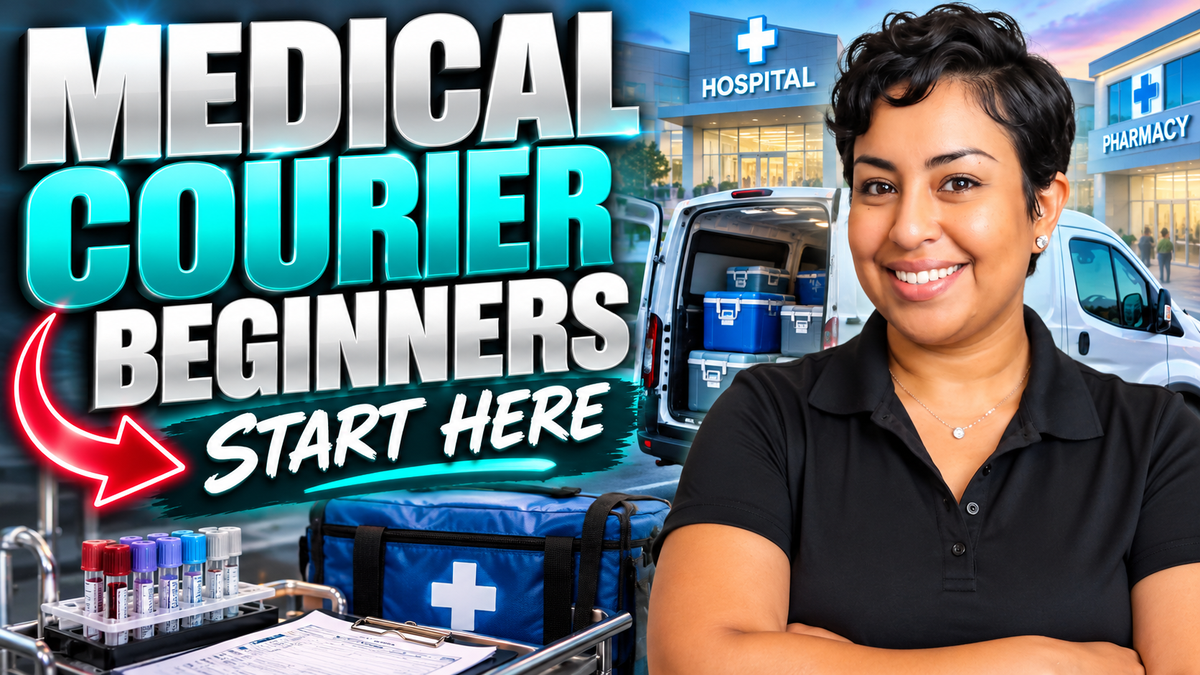
Are you interested in becoming a medical courier but don’t know where to start? Medical courier services are an important part of healthcare logistics, helping hospitals, laboratories, pharmacies, and healthcare organizations transport essential medical materials.
Unlike traditional package delivery, medical courier work may involve time-sensitive specimens, medical supplies, prescription medications, and specialized transportation procedures.
The good news is that beginners can explore medical courier opportunities without owning a large delivery fleet or having a medical degree. However, understanding the industry, training requirements, equipment, and employment options is essential before getting started.
In this LearnCargo beginner’s guide, we’ll explain what medical couriers do, how to prepare for the industry, where to find opportunities, and what to consider before starting your own courier business.
1. What Is a Medical Courier?
A medical courier is a delivery professional who transports healthcare-related materials between authorized locations.
Unlike a traditional delivery driver, a medical courier may need to follow specialized procedures related to safety, documentation, confidentiality, and transportation conditions.
Common pickup and delivery locations include:
- Hospitals and medical centers
- Clinical laboratories
- Pharmacies
- Physician offices
- Surgery centers
- Diagnostic testing facilities
- Medical supply distributors
- Long-term care facilities
Some deliveries are scheduled on recurring routes, while others involve urgent transportation requests.
For example, a laboratory courier might collect specimens from several medical offices and deliver them to a centralized testing facility.
A pharmacy courier might transport authorized prescription orders to healthcare facilities or patients under applicable requirements.
Medical couriers help keep healthcare supply chains moving, even though they generally do not provide direct medical treatment.
2. Understand the Different Types of Medical Courier Jobs
One of the biggest mistakes beginners make is assuming that all medical courier jobs involve transporting blood samples.
Healthcare logistics includes several different delivery categories.
Laboratory Specimen Couriers
Transport properly packaged specimens between collection sites, laboratories, and healthcare facilities.
Pharmacy Delivery Drivers
Transport prescription medications or pharmacy products according to employer procedures and applicable regulations.
Medical Supply Couriers
Deliver items such as examination supplies, diagnostic equipment, and approved medical products.
Hospital Interfacility Couriers
Transport authorized materials, documents, and supplies between hospitals, clinics, and affiliated facilities.
Specialty Medical Logistics Drivers
May transport temperature-sensitive products, dental laboratory items, surgical supplies, or other specialized healthcare materials.
Not every position requires the same vehicle, training, or experience.
Understanding these differences can help you choose opportunities that match your interests and qualifications.
3. Determine Whether You Meet Basic Requirements
Medical courier qualifications depend on the employer, transportation contract, and types of materials being delivered.
For many entry-level driving positions, employers commonly look for:
- A valid driver’s license
- A satisfactory driving record
- Dependable transportation
- The ability to follow written instructions
- Reliable communication
- Strong time-management skills
- Professional customer service
- The ability to handle assigned delivery materials safely
Some employers may require background screening, drug testing, previous delivery experience, or specific physical capabilities.
A commercial driver’s license is not universally required for medical courier work. Whether one is necessary depends on the vehicle and applicable transportation regulations.
Before applying, carefully review each company’s qualifications.
4. Learn About Medical Courier Training and Certifications
Many beginners believe they must purchase several certifications before applying for medical courier positions.
That is not always true.
There is no single universal medical courier certificate that automatically qualifies someone for every healthcare delivery position.
However, specialized training may be required by law for particular activities or by employers and customers.
Important training areas include:
HIPAA and Patient Privacy
Couriers should understand how to protect confidential patient information they encounter. Whether a courier company is legally a HIPAA business associate depends on the services it performs; certain transportation-only conduits are treated differently.
Bloodborne Pathogens Safety
Workers whose duties involve reasonably anticipated occupational exposure to blood or other potentially infectious materials are subject to applicable OSHA protections and training requirements.
Specimen Handling and Transportation
Laboratory delivery work may involve special packaging, labeling, handling, and documentation procedures.
Chain of Custody
Some deliveries require documented transfers showing who possessed the material during transportation.
Cold Chain Awareness
Temperature-sensitive deliveries may require knowledge of approved packaging, monitoring, and temperature-control procedures.
Do not purchase expensive certification packages without first researching the requirements of the positions you want.
5. Choose Between Employment and Independent Contracting
Medical courier opportunities generally fall into two broad categories.
Working as an Employee
Employees typically work under an employer’s established operating procedures.
Depending on the position, the company may provide a vehicle, equipment, training, and scheduled routes.
Employee positions may offer predictable compensation and benefits, although these vary by employer.
Working as an Independent Contractor
Independent contractors may provide delivery services using their own vehicles and equipment.
They can be responsible for business expenses such as fuel, maintenance, insurance, and taxes.
However, a company cannot legally classify a worker as an independent contractor simply by calling the position a 1099 opportunity. Worker classification depends on the applicable legal standards and working relationship.
Before accepting either arrangement, understand your responsibilities, payment structure, and operating expenses.
6. Choose the Right Vehicle and Equipment
Not every medical courier needs a cargo van or specialized delivery truck.
Some positions use ordinary passenger cars, while others require SUVs, vans, or commercially equipped vehicles.
Your vehicle requirements depend on the deliveries you perform.
Common considerations include:
- Clean and reliable vehicle condition
- Sufficient cargo space
- Secure transportation areas
- Fuel efficiency
- Commercial-use insurance requirements
- Approved temperature-control equipment
- Employer or contract vehicle standards
Some courier assignments may also require insulated transport containers, tamper-evident materials, or documentation tools.
LearnCargo Tip: Do not purchase an expensive medical cooler or specialized equipment before confirming what your employer or customer requires.
Different materials have different handling and temperature requirements. A cooler alone does not establish that a shipment is being transported safely.
7. Understand Medical Courier Safety Procedures
Medical courier work can involve regulated materials, making safety knowledge essential.
Some infectious substances are subject to U.S. Department of Transportation hazardous materials regulations governing classification, packaging, labeling, and transportation.
Requirements vary depending on what is being shipped.
Couriers should never assume that all medical specimens can be transported using the same packaging method.
Before accepting specialized deliveries, understand:
- What materials are being transported
- Who is responsible for proper packaging
- Applicable labeling requirements
- Emergency procedures
- Required protective equipment
- Documentation and tracking procedures
- Whether hazardous materials rules apply
Employers and contracting organizations should establish appropriate procedures for their operations.
Medical courier drivers should not open sealed specimens, medications, or medical shipments unless specifically authorized and trained to do so.
8. Learn How to Find Medical Courier Jobs
Finding medical courier opportunities requires more than typing one job title into a search engine.
Healthcare delivery companies use many different terms to describe similar work.
Try searching for:
- Medical courier driver
- Laboratory courier
- Specimen transport driver
- Pharmacy delivery driver
- Healthcare logistics driver
- Medical supply delivery
- Hospital courier
- Route delivery driver
- Pharmaceutical delivery driver
- Clinical laboratory courier
Search company career pages, major job boards, regional healthcare logistics providers, and laboratory organizations.
Also, explore transportation companies that offer healthcare delivery services even when their company names do not contain the words “medical courier.”
Different search terms can reveal opportunities you may otherwise overlook.
9. Understand Medical Courier Pay and Expenses
Medical courier earnings vary widely based on location, employer, work schedule, delivery type, and employment arrangement.
Some positions provide hourly wages, while contractor arrangements may pay per route, stop, delivery, or negotiated service agreement.
When evaluating an opportunity, consider more than the advertised amount.
For example, a route paying $150 may sound attractive. However, an independent contractor must calculate fuel, unpaid mileage, maintenance, insurance, taxes, and the total time required.
A route that takes eight hours and includes substantial driving expenses may be less profitable than expected.
Before accepting an assignment, ask:
- How is compensation calculated?
- Are return trips paid?
- Are fuel and mileage reimbursed?
- Who provides transportation equipment?
- Are waiting times compensated?
- What happens when deliveries are canceled?
- When are payments issued?
Understanding these details helps you make better financial decisions.
10. Consider Starting Your Own Medical Courier Business
Some medical couriers eventually decide to operate their own transportation companies.
Starting a business involves additional responsibilities beyond driving.
Depending on your services and location, you may need to:
- Register your business.
- Obtain an Employer Identification Number.
- Research applicable business licenses.
- Obtain appropriate commercial insurance.
- Establish operating and safety procedures.
- Set up scheduling and invoicing systems.
- Identify prospective healthcare customers.
- Negotiate transportation agreements.
Business owners should also understand confidentiality, service documentation, transportation regulations, and customer requirements.
Healthcare contracts may require proof of insurance, driver screening, training records, and operating procedures.
One important distinction is that working as a medical courier does not automatically mean you own a medical courier business.
Employment, subcontracting, and direct business contracts involve different responsibilities and financial risks.
11. Common Mistakes New Medical Couriers Should Avoid
Beginners can save time and money by avoiding several common mistakes.
Buying unnecessary certifications: Research job requirements before paying for training programs.
Purchasing expensive equipment too early: Confirm your intended delivery services and customer requirements first.
Searching only one job title: Explore alternative healthcare logistics terminology.
Ignoring operating expenses: Independent contractors must understand their actual cost of completing deliveries.
Assuming every medical delivery is the same: Different materials can have different handling and transportation requirements.
Confusing delivery apps with business contracts: App-based assignments and direct healthcare service agreements are different business opportunities.
A strong foundation begins with understanding the industry before investing significant money.
Frequently Asked Questions
Can I become a medical courier without experience?
Yes, some employers consider entry-level applicants. Requirements depend on the position, and specialized assignments may require additional training or experience.
Do I need a medical degree?
Most general medical courier driving positions do not require a medical degree. However, employers may require job-specific qualifications and training.
Can I use my personal vehicle?
Some positions allow qualifying personal vehicles. You must confirm the employer’s requirements and obtain insurance appropriate for the actual commercial use.
Is medical courier work the same as delivering food or packages?
No. Although driving and route management skills overlap, medical deliveries can involve healthcare confidentiality, regulated materials, documentation, and specialized handling requirements.
Can I start my own medical courier company?
Yes, subject to applicable business, insurance, transportation, and safety requirements. Research customer demand and operating costs before starting.
Final Thoughts: Starting Your Medical Courier Career
Becoming a medical courier can provide an entry point into healthcare logistics for individuals interested in transportation and delivery services.
The most important first steps are identifying the type of courier work you want, understanding employer requirements, learning applicable safety procedures, and researching legitimate job opportunities.
You do not need to purchase every certification or piece of equipment advertised online before getting started.
Focus on building the qualifications that match your chosen medical courier path.
Explore our additional articles and video tutorials to continue learning about opportunities throughout the transportation industry.
Disclaimer: This article is for general educational purposes. Employment qualifications, transportation regulations, training requirements, and business obligations vary by location and type of shipment. Verify applicable requirements with employers and regulatory agencies.
