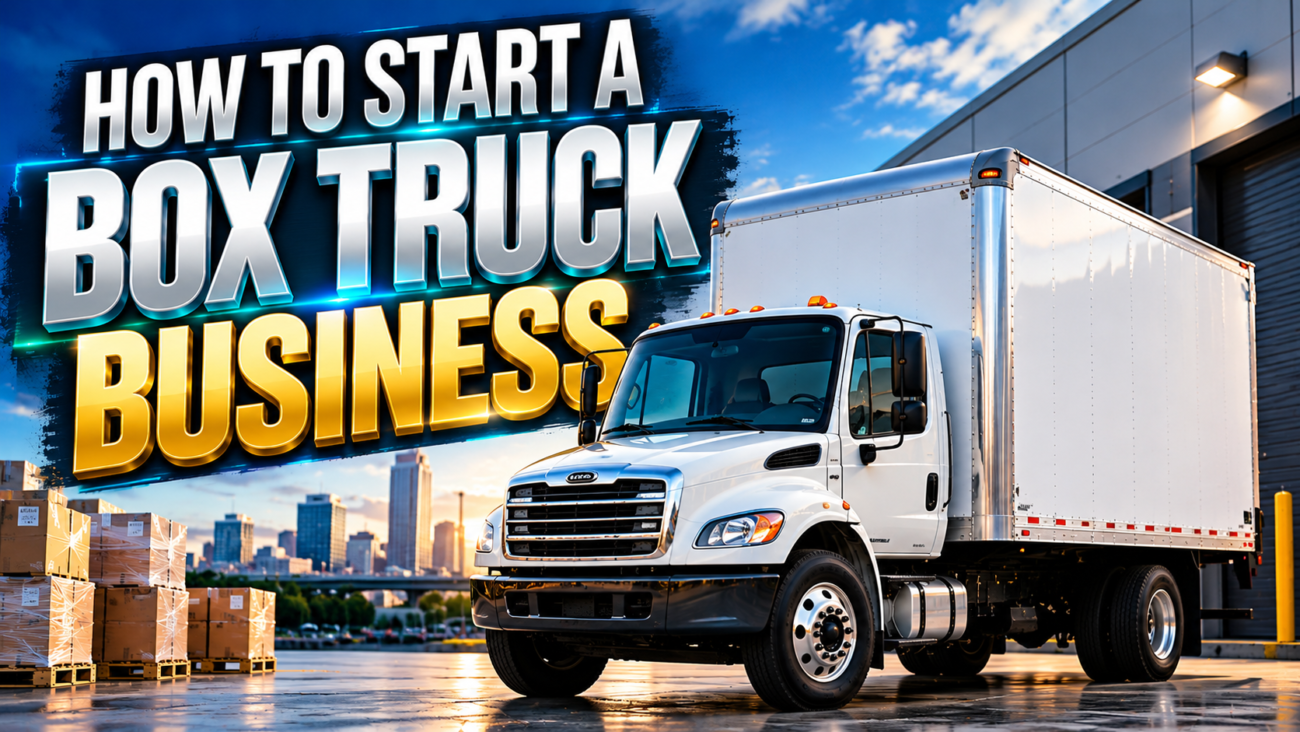
Starting a box truck business can be an opportunity for entrepreneurs who want to enter the transportation and logistics industry without operating a tractor-trailer. From local deliveries and furniture transportation to commercial freight and specialized logistics, box trucks support many different industries.
However, learning how to start a box truck business involves more than purchasing a truck and finding loads. New operators must understand licensing, insurance, vehicle specifications, transportation regulations, operating expenses, and customer acquisition.
Additionally, not all box truck businesses operate the same way. A local delivery company serving furniture stores may have different requirements than a carrier hauling interstate freight.
In this LearnCargo beginner’s guide, we’ll explore the essential steps involved in starting a box truck business, choosing the right equipment, and building a sustainable transportation operation.
1. What Is a Box Truck Business?
A box truck business uses a vehicle with an enclosed cargo compartment to transport goods, equipment, or other commercial materials.
Unlike cargo vans, box trucks generally provide more cargo space and may accommodate larger or heavier shipments.
Businesses use box trucks for:
- Retail and furniture deliveries
- Commercial freight transportation
- Medical equipment deliveries
- Office furniture and equipment transportation
- Appliance deliveries
- Event equipment transportation
- Warehouse distribution
- Construction material deliveries
Some operators work with freight brokers, while others establish agreements directly with commercial customers.
Therefore, choosing your business model should be one of your first decisions.
Local Delivery Versus Freight Transportation
Local delivery businesses often complete multiple stops within a defined service area.
Meanwhile, freight transportation businesses may handle longer routes, warehouse pickups, and scheduled shipments between commercial locations.
Each model has different scheduling demands, equipment requirements, and operating expenses.
2. Choose the Right Box Truck Size
One of the most important decisions involves selecting the appropriate truck.
Common box truck lengths include approximately 12, 16, 20, 24, and 26 feet. Actual dimensions, cargo capacity, and weight ratings vary by manufacturer.
Smaller trucks may work well for local deliveries, while larger trucks can provide additional cargo space for commercial freight.
Before purchasing, consider:
- Cargo weight and dimensions
- Truck payload capacity
- Gross Vehicle Weight Rating (GVWR)
- Loading dock compatibility
- Vehicle height restrictions
- Fuel efficiency
- Maintenance expenses
- Whether a liftgate is necessary
Dock Height and Liftgate Considerations
Not every box truck can easily accommodate traditional warehouse loading docks.
Some smaller trucks have lower cargo floors, making loading dock access more difficult without appropriate equipment.
Furthermore, a liftgate can be useful for deliveries at locations without loading docks.
However, liftgates add weight, maintenance costs, and operational considerations.
LearnCargo Tip: Research the freight or deliveries you want to transport before choosing your truck. Buying the wrong vehicle can limit your business opportunities.
3. Understand CDL and Non-CDL Requirements
Many beginners ask whether they need a Commercial Driver’s License (CDL) to operate a box truck.
The answer depends on the vehicle’s weight ratings, configuration, cargo, and applicable regulations.
Non-CDL Box Trucks
A typical single-unit box truck with a GVWR below 26,001 pounds generally does not require a CDL under federal rules when transporting ordinary, nonhazardous property.
However, commercial motor carrier regulations may still apply.
A non-CDL truck is not automatically exempt from DOT registration, medical qualification, hours-of-service rules, or vehicle inspection requirements.
CDL Box Trucks
A single vehicle with a GVWR or gross vehicle weight of 26,001 pounds or more generally falls under Class B CDL requirements, unless a different classification or exception applies.
Certain towing combinations can trigger Class A requirements.
Additionally, hazardous materials transportation can create separate licensing and endorsement obligations.
Verify the vehicle’s manufacturer weight rating rather than relying only on its advertised length.
For official CDL classifications, visit the Federal Motor Carrier Safety Administration.
4. Register Your Box Truck Business
Once you’ve selected your business model, establish your company.
Many transportation entrepreneurs choose a Limited Liability Company (LLC), although other structures may be appropriate.
Typical registration steps include:
- Choose an available business name.
- Register your company with your state.
- Obtain an Employer Identification Number (EIN), if required or appropriate.
- Open a business bank account.
- Research local licenses and permits.
- Establish bookkeeping and expense-tracking systems.
An EIN can be obtained directly from the IRS at no cost.
Additionally, consider creating a professional business email address and website.
Commercial customers may request company information, insurance certificates, service capabilities, and vendor registration documents before awarding work.
5. Determine Your DOT and Operating Authority Requirements
This is one of the most important steps when starting a box truck business.
Your regulatory obligations depend on several factors, including whether you operate within one state or cross state lines.
Intrastate Transportation
Intrastate transportation generally involves operations entirely within one state, although the legal classification of a shipment can depend on its broader movement.
State transportation regulations vary. Some states require commercial vehicle registration, operating permits, USDOT numbers, or additional credentials for qualifying intrastate carriers.
Interstate Transportation
Qualifying commercial vehicles operating in interstate commerce may require a USDOT number.
For example, federal motor carrier safety rules generally apply to property-carrying vehicles with a GVWR, GCWR, actual vehicle weight, or actual combination weight of 10,001 pounds or more, subject to applicable definitions and exceptions.
For-hire interstate carriers transporting regulated property generally also require appropriate FMCSA operating authority.
Other requirements may include process-agent designation, Unified Carrier Registration, and insurance filings.
Important: A USDOT number and operating authority are not the same thing. Determine which registrations apply before accepting transportation assignments.
6. Obtain Appropriate Commercial Insurance
Commercial truck insurance is a major operating expense.
Personal automobile insurance is not a substitute for coverage appropriate to your commercial transportation activities.
Depending on your operation, you may need:
- Commercial automobile liability insurance
- Motor truck cargo insurance
- Physical damage coverage
- General liability insurance
- Workers’ compensation coverage
- Other coverage required by contracts
Freight brokers and direct customers may require specific insurance limits.
For example, a company transporting valuable medical equipment or furniture may need cargo coverage appropriate to the shipment’s value and risks.
Compare Coverage Carefully
Insurance costs depend on factors such as vehicle type, location, operating radius, driving history, cargo, and business experience.
Therefore, request quotes before purchasing or financing a truck.
Review policy exclusions and deductibles, not simply the monthly premium.
7. Understand Startup and Operating Costs
Starting a box truck company requires more than a down payment on a vehicle.
Common startup expenses include:
- Business registration
- Truck purchase, lease, or rental
- Commercial insurance deposits
- Regulatory registrations
- Vehicle inspections
- Cargo equipment
- Dispatching and communication tools
- Marketing and administrative costs
Meanwhile, ongoing expenses may include fuel, maintenance, tires, tolls, insurance, financing, and driver wages.
Calculate Your Cost Per Mile
For example, suppose your total operating expenses are $4,000 for a month and your truck travels 4,000 miles.
Your average operating cost would be $1 per mile.
However, this simplified calculation only works if you’ve included all relevant expenses, including costs that are easy to overlook.
You must also account for unpaid mileage.
A shipment paying $500 may be less attractive if completing it requires significant empty driving before pickup or after delivery.
As a result, revenue alone should never determine whether you accept a load.
8. Choose Your Box Truck Business Model
Many beginners focus exclusively on freight load boards.
However, box trucks can serve a variety of industries beyond traditional freight hauling.
Freight and Distribution
Operators may transport palletized products, retail inventory, or other commercial shipments between warehouses and customers.
Furniture and Appliance Delivery
Retailers and distributors often require delivery services for large household products.
Some assignments may also involve inside delivery, assembly, or installation, which require additional capabilities.
Medical Equipment Logistics
Healthcare facilities and medical suppliers may need transportation for beds, examination equipment, and other large medical products.
Event and Commercial Services
Event businesses may transport tables, chairs, staging equipment, and rental supplies.
Additionally, box trucks may support office relocations, commercial equipment deliveries, and construction supply transportation.
LearnCargo Tip: Research multiple industries before choosing a niche. Direct commercial relationships may provide opportunities that differ from standard freight-board assignments.
9. Find Box Truck Loads and Customers
Finding consistent work is one of the biggest challenges for new transportation companies.
Potential sources of business include:
- Freight brokers
- Load boards
- Warehouses and distribution centers
- Manufacturers
- Furniture retailers
- Commercial suppliers
- Healthcare organizations
- Event rental businesses
- Local companies requiring recurring deliveries
Load Boards Versus Direct Contracts
Load boards can help operators discover available freight.
However, competition, shipment requirements, and pricing can affect profitability.
Direct customer agreements may provide recurring transportation opportunities, although securing them often takes time.
In addition, some brokers require carriers to meet operating-history, insurance, authority, or safety qualifications.
Build a professional company profile that explains your service area, vehicle capacity, equipment, insurance, and delivery capabilities.
10. Develop Reliable Daily Operations
A successful box truck business requires organization.
Important operating responsibilities include scheduling, route planning, equipment inspections, customer communication, and delivery documentation.
Depending on your operations, you may also need to manage driver qualification files, hours-of-service records, electronic logging requirements, and vehicle maintenance documentation.
Protect Your Equipment and Profit
Preventive maintenance helps reduce unexpected breakdowns.
Keep records of:
- Fuel purchases
- Maintenance and repairs
- Vehicle inspections
- Completed deliveries
- Customer invoices
- Driver expenses
- Insurance renewals
Furthermore, establish clear procedures for delivery delays, damaged freight, customer disputes, and emergency situations.
Professional communication and dependable service can help establish long-term customer relationships.
11. Avoid Common Box Truck Startup Mistakes
New operators sometimes invest heavily before determining whether sufficient freight opportunities exist.
Common mistakes include:
Buying a truck before finding customers: Research demand and equipment requirements first.
Assuming non-CDL means no regulations: Many safety and registration obligations can still apply.
Underestimating expenses: Fuel, maintenance, insurance, and unpaid mileage can significantly reduce earnings.
Depending entirely on load boards: Explore direct customers and specialized local markets.
Ignoring truck specifications: Cargo height, payload, liftgate capacity, and dock compatibility affect which jobs you can perform.
Expanding too quickly: Additional trucks increase fixed expenses even when revenue is inconsistent.
Planning ahead can help reduce financial risk and prevent avoidable operational problems.
Frequently Asked Questions
Can I start a box truck business without a CDL?
Yes, many operators use qualifying non-CDL box trucks. However, the vehicle’s weight ratings, cargo, towing configuration, and applicable regulations determine licensing requirements.
Do I need a DOT number for a box truck?
Possibly. USDOT registration requirements depend on the truck and its operations. Interstate commercial vehicles meeting applicable thresholds generally require registration, and some states impose additional intrastate requirements.
Do I need an MC number?
For-hire interstate transportation of regulated property generally requires FMCSA operating authority. Some operations are exempt, so verify your specific business model.
Can I start with one box truck?
Yes. Starting with one truck may allow you to evaluate demand and operating expenses before investing in a larger fleet.
Are box truck businesses profitable?
They can be, but profitability depends on transportation rates, customer demand, mileage, insurance, maintenance, financing, and operating efficiency.
Final Thoughts: Starting a Box Truck Business
Learning how to start a box truck business begins with choosing the right transportation model, understanding regulations, and researching potential customers.
Before purchasing equipment, verify vehicle specifications, calculate startup expenses, obtain insurance quotes, and evaluate transportation demand in your market.
Most importantly, remember that owning a truck does not automatically create a profitable business.
Continue exploring our educational guides to build the knowledge needed to make informed transportation business decisions.
Disclaimer: This article provides general educational information. Transportation regulations and commercial requirements vary by jurisdiction, vehicle, cargo, and business activity. Confirm current requirements with the appropriate regulatory agencies before operating.
