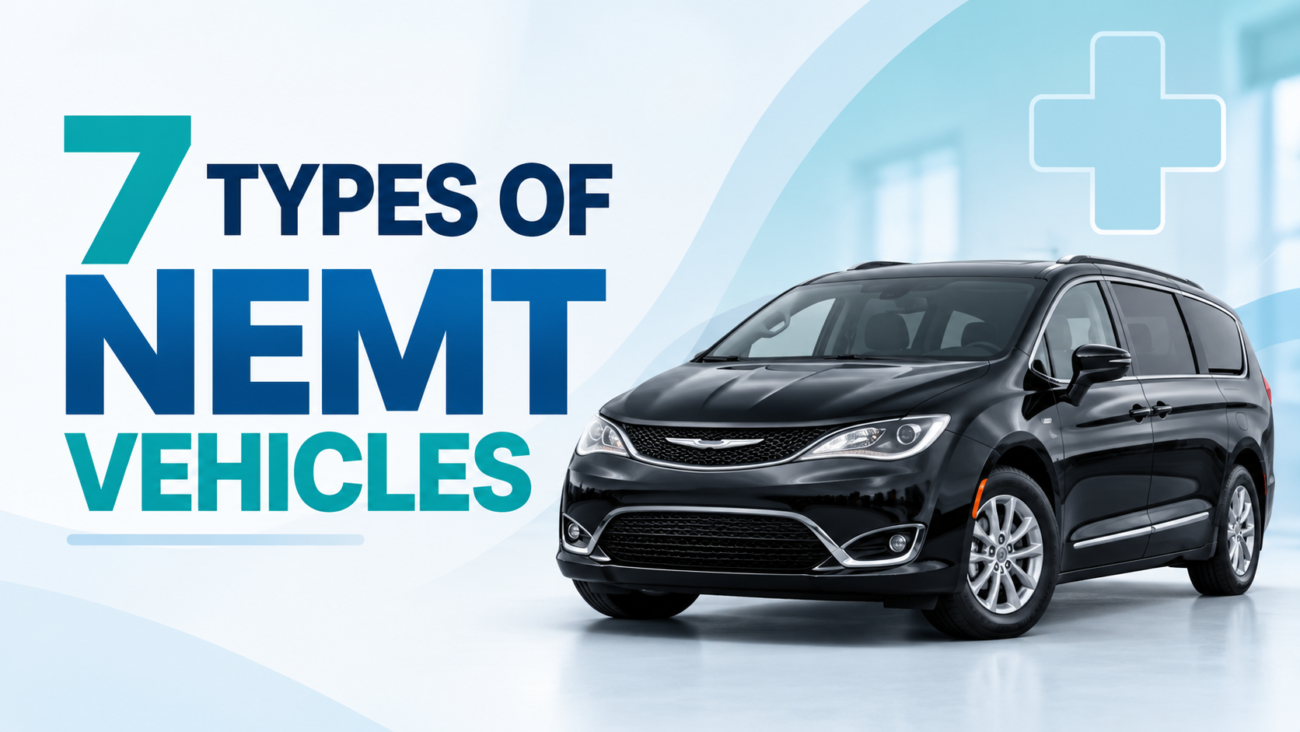
Non-Emergency Medical Transportation (NEMT) helps individuals access healthcare services when transportation presents a barrier. However, not every passenger requires the same type of vehicle or level of assistance.
Some passengers can travel comfortably in a standard minivan, while others require wheelchair-accessible vehicles, stretcher transportation, or larger passenger vehicles. Additionally, specialized medical transportation may involve aircraft for long-distance travel or patients with significant medical needs.
Understanding the 7 types of NEMT vehicles and related medical transportation options can help aspiring transportation business owners choose the right services, equipment, and customers.
In this LearnCargo guide, we’ll explore seven transportation options, their common uses, important requirements, and how they fit into the broader healthcare transportation industry.
1. Ambulatory Passenger Van (7-Passenger)
One of the most recognizable vehicles used in NEMT is the standard passenger minivan.
These vehicles commonly transport ambulatory passengers, meaning individuals who can walk and enter or exit a vehicle without requiring wheelchair transportation.
Depending on the vehicle configuration, a seven-passenger minivan can accommodate a driver and multiple passengers.
Common Uses for Ambulatory Transportation
Ambulatory vehicles may provide transportation to:
- Primary care appointments
- Dialysis centers
- Physical therapy facilities
- Behavioral health services
- Outpatient medical appointments
- Specialist consultations
Vehicles such as the Chrysler Pacifica, Toyota Sienna, and Honda Odyssey are examples of passenger minivans, although contract eligibility depends on the vehicle’s specifications and applicable requirements.
Advantages for NEMT Operators
Standard minivans may have lower acquisition and maintenance costs than specialized wheelchair-accessible vehicles.
Additionally, many provide comfortable passenger seating, flexible interiors, and manageable fuel expenses.
However, owning a minivan does not automatically qualify someone to provide Medicaid transportation.
Operators must satisfy applicable insurance, licensing, vehicle inspection, and driver requirements.
LearnCargo Tip: If you’re considering ambulatory transportation, verify passenger capacity and broker vehicle standards before purchasing.
2. Wheelchair-Accessible Van
Wheelchair-accessible vans are designed to accommodate passengers who remain seated in their wheelchairs during transportation.
These vehicles are especially important for individuals who cannot safely transfer into standard passenger seating.
Important Accessibility Equipment
A wheelchair-accessible vehicle may include:
- A wheelchair ramp or powered lift
- Approved wheelchair securement systems
- Occupant restraint systems
- Accessible entry and exit areas
- Appropriate interior clearance
- Additional passenger assistance equipment
Some wheelchair-accessible vehicles are converted minivans, while others are larger passenger vans.
Training and Safety Considerations
Drivers must understand safe boarding, wheelchair positioning, securement procedures, and applicable passenger assistance requirements.
Furthermore, ramps and lifts require inspection and maintenance.
Wheelchair transportation can involve additional operating expenses, but it also serves a specialized passenger population.
Before entering this market, research your state’s accessibility standards, insurance requirements, and transportation broker qualifications.
3. Stretcher and Gurney Transportation Vans
Some passengers cannot safely sit upright in a standard vehicle or wheelchair.
In certain jurisdictions, specialized non-emergency stretcher vehicles transport passengers who need to remain in a reclining or lying position.
These vehicles are sometimes called stretcher vans or gurney vans.
How Stretcher Transportation Works
A properly equipped stretcher vehicle may include:
- A compatible stretcher or gurney
- Approved stretcher locking systems
- Specialized loading equipment
- Appropriate passenger restraint systems
- Space for required attendants
- Equipment suited to the permitted service
However, stretcher transportation is not automatically the same as ambulance transportation.
Important Licensing Distinctions
Some states distinguish non-emergency stretcher transportation from ambulance services. Others impose additional restrictions, licensing requirements, or medical oversight obligations.
Passengers requiring medical monitoring, clinical intervention, or emergency treatment may need an appropriately licensed ambulance rather than a stretcher van.
Therefore, operators should never assume they can legally provide stretcher transportation simply by installing a gurney inside a cargo vehicle.
This specialized service requires careful regulatory research before purchasing equipment.
4. Converted Transit Vans
Converted passenger vans are another option used in healthcare transportation.
Vehicles such as the Ford Transit and Ram ProMaster may be modified by qualified upfitters to accommodate specific passenger transportation requirements.
Unlike ordinary cargo vans, converted NEMT vehicles must be properly equipped and approved for their intended passenger services.
Common Vehicle Configurations
Depending on the conversion, a larger passenger van may accommodate:
- Multiple ambulatory passengers
- Wheelchair positions
- Passenger seating with accessibility equipment
- Specialized entry and exit systems
Some configurations allow transportation companies to serve different passenger mobility needs using the same vehicle.
What Operators Should Consider
Vehicle conversions can significantly affect seating capacity, weight ratings, accessibility, and insurance requirements.
Additionally, larger vehicles may trigger different driver licensing or commercial vehicle regulations.
Before purchasing a converted van, verify manufacturer weight ratings, passenger capacity, equipment certifications, and compliance with applicable transportation standards.
A professional conversion does not automatically mean the vehicle qualifies for every Medicaid broker network.
5. NEMT Buses and Public Transit Programs
Medical transportation does not always involve individual passenger vans.
Some healthcare transportation programs use small buses, paratransit vehicles, shuttle services, or existing public transit systems.
These options may be suitable for individuals who can safely use shared transportation.
NEMT Shuttle and Paratransit Vehicles
Larger passenger vehicles can support scheduled group transportation, particularly when multiple passengers travel to similar destinations.
However, group transportation requires careful route planning, scheduling, passenger safety procedures, and appropriate vehicle capacity.
Depending on passenger capacity and vehicle characteristics, additional commercial driver licensing requirements may apply.
Public Transportation and Medicaid
Some Medicaid transportation programs provide eligible beneficiaries with bus passes, transit tickets, or other public transportation assistance.
For example, a passenger who can independently use an accessible public bus may not require an individual NEMT vehicle.
Public transit programs and paratransit providers operate under their own rules and eligibility standards.
Important: A publicly operated bus is not necessarily a privately contracted NEMT vehicle. Operators should distinguish public transit services from commercial transportation contracts.
6. Medical Transport Jets and Fixed-Wing Aircraft
Medical transportation sometimes involves airplanes, particularly when passengers must travel long distances to receive specialized healthcare services.
However, it’s important to distinguish ordinary non-emergency air travel from medical air ambulance services.
Non-Emergency Air Travel
Depending on the transportation program and medical circumstances, an eligible patient may travel on a commercial airline to reach covered healthcare services.
Travel arrangements may also involve an approved medical escort or other assistance when required.
This type of transportation does not necessarily involve a dedicated medical aircraft.
Fixed-Wing Medical Aircraft
Specialized fixed-wing aircraft may transport patients who need medical monitoring, clinical care, or other services during flight.
These operations can involve:
- Approved aviation operators
- Medical personnel
- Specialized medical equipment
- Patient monitoring systems
- Medical and aviation safety procedures
Medical transport jets and fixed-wing air ambulances operate under requirements that differ substantially from ordinary NEMT van services.
Business Considerations
For entrepreneurs, aviation-based medical transportation requires specialized expertise, significant financial resources, and compliance with aviation and healthcare regulations.
It should not be viewed as a simple extension of a conventional NEMT van business.
7. Helicopter Medical Transportation
Helicopters represent another specialized form of medical transportation.
Unlike ordinary ground NEMT services, helicopter air ambulances are commonly used when patients require urgent medical transportation or when geographical conditions make ground transport unsuitable.
Why Helicopters Are Used
Helicopters may support transportation when:
- Patients require rapid access to specialized treatment
- Ground travel would create significant delays
- Remote locations are difficult to reach
- Appropriate medical care is unavailable nearby
- Clinical circumstances justify air transportation
These aircraft may carry specialized medical equipment and trained medical personnel.
Are Helicopters Considered NEMT?
Helicopter air ambulance services should not be described as a standard NEMT vehicle category.
Although both industries involve patient transportation, they operate under substantially different regulations, clinical requirements, and business models.
The Federal Aviation Administration establishes aviation safety requirements for helicopter air ambulance operations.
In addition, medical necessity, insurance coverage, staffing, and reimbursement rules can affect whether an air ambulance service is appropriate.
For beginners exploring healthcare transportation businesses, helicopters are best understood as part of the broader medical transport ecosystem rather than an ordinary NEMT startup opportunity.
How to Choose the Right NEMT Vehicle for Your Business
Choosing the right transportation vehicle depends on your intended passengers, service area, finances, and applicable regulations.
Before purchasing any vehicle, research the following factors.
Passenger Mobility Requirements
Determine whether you plan to transport ambulatory passengers, wheelchair users, or passengers requiring specialized medical transportation.
Different passenger needs require different equipment and driver qualifications.
Startup and Operating Costs
Consider purchase price, fuel, commercial insurance, maintenance, accessibility modifications, and equipment expenses.
Additionally, evaluate whether your expected transportation revenue can support those costs.
Transportation Contracts
Research the vehicle requirements established by Medicaid brokers, managed care organizations, and prospective commercial customers.
Some transportation networks have specific standards for vehicle age, accessibility equipment, inspections, and passenger capacity.
State and Federal Regulations
Driver qualifications, insurance standards, and transportation licensing vary by jurisdiction and service type.
Therefore, verify requirements before investing in specialized equipment.
Frequently Asked Questions
What is the most common NEMT vehicle?
Passenger minivans and wheelchair-accessible vans are familiar ground transportation options. However, the most appropriate vehicle depends on passenger needs and the transportation program.
Can I start a NEMT business with a regular minivan?
Potentially, yes, for qualifying ambulatory transportation services. You must still meet applicable state regulations, insurance standards, and contracting requirements.
Can a cargo van be converted into a NEMT vehicle?
Certain vehicles can be professionally converted for passenger transportation. However, conversions must meet applicable safety, accessibility, registration, and approval requirements.
Can Medicaid pay for stretcher transportation?
Some state Medicaid programs cover qualifying non-emergency stretcher transportation. Coverage, medical necessity, authorization, and provider requirements vary.
Does Medicaid cover air transportation?
Certain Medicaid programs may cover qualifying non-emergency air travel or medically necessary air transportation under specific conditions. These services have different eligibility and authorization requirements.
Final Thoughts: Understanding NEMT Vehicles
The healthcare transportation industry includes several types of vehicles designed to meet different passenger needs.
For aspiring NEMT business owners, ambulatory minivans, wheelchair-accessible vans, converted passenger vans, and approved stretcher vehicles are important categories to research.
Meanwhile, public transit programs, fixed-wing medical aircraft, and helicopters illustrate the broader transportation systems that help patients access healthcare.
However, these services are not interchangeable. Each has distinct operating requirements, costs, and safety responsibilities.
Before purchasing a vehicle, research your state’s regulations, identify potential transportation customers, and evaluate which services align with your business goals.
Continue learning with our guide on How to Start a NEMT Business to explore licensing, insurance, startup expenses, and transportation contracts.
Disclaimer: This article is for general educational purposes. Vehicle requirements, medical transportation classifications, Medicaid coverage, and licensing standards vary by jurisdiction and service type. Always verify current requirements with the appropriate regulatory agencies.
