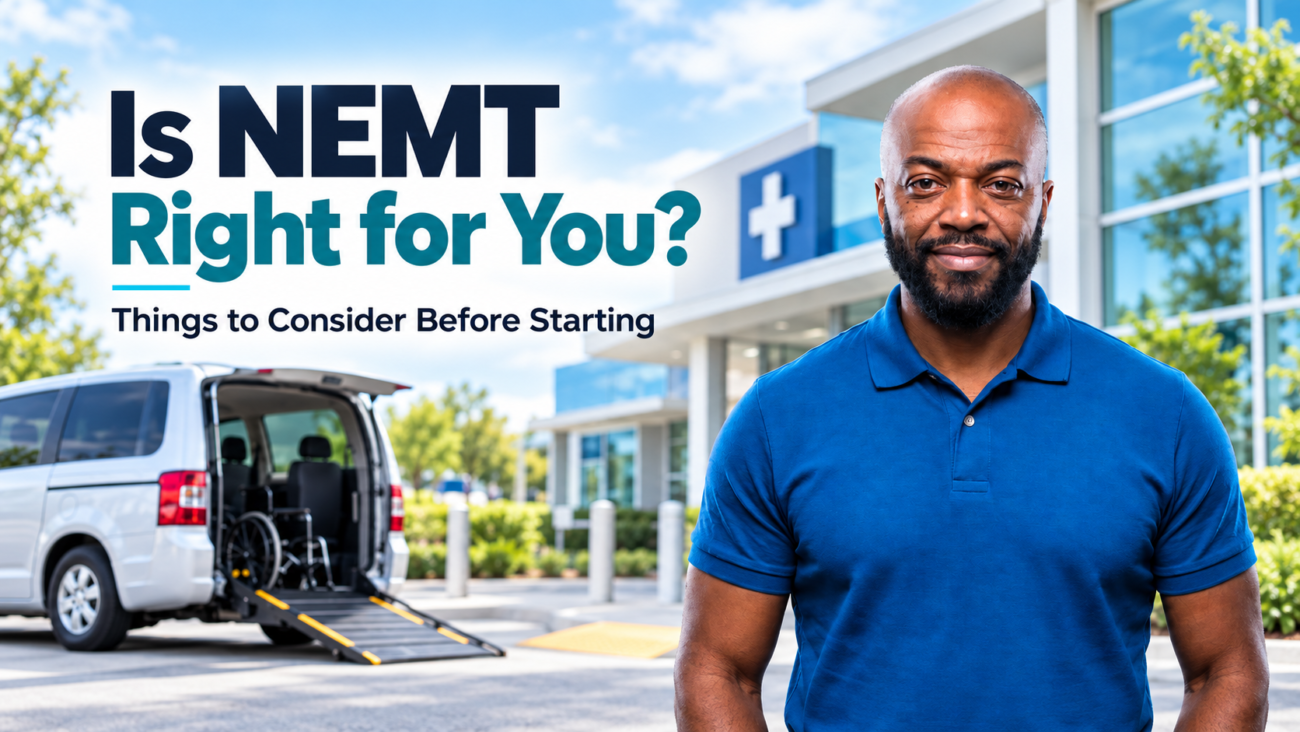
Are you thinking about starting a Non-Emergency Medical Transportation (NEMT) business? Before purchasing a vehicle or registering your company, it’s important to ask yourself one question: Is NEMT right for you?
The NEMT industry offers opportunities for entrepreneurs interested in healthcare transportation. However, operating a transportation company requires much more than driving passengers to medical appointments.
Business owners must manage scheduling, insurance, transportation regulations, customer service, expenses, and potentially employees. Additionally, working with passengers who have mobility limitations requires patience, professionalism, and a strong commitment to safety.
In this LearnCargo guide, we’ll explore ten important considerations to help you determine whether starting a NEMT business aligns with your skills, finances, and long-term goals.
1. Do You Enjoy Helping People?
NEMT is more than a transportation service. You’re helping people access important healthcare appointments and treatments.
Passengers may include older adults, individuals with disabilities, dialysis patients, and people recovering from medical procedures.
As a result, providing excellent service often requires more patience than a traditional delivery business.
Some passengers need additional time entering or exiting vehicles. Others may require approved mobility assistance or have difficulty communicating their needs.
Ask yourself:
- Am I patient when someone needs extra assistance?
- Can I remain professional during stressful situations?
- Do I enjoy providing helpful customer service?
- Can I treat every passenger with dignity and respect?
If you enjoy helping others while maintaining professional boundaries, NEMT may be a rewarding business opportunity.
However, if you prefer transporting packages without interacting with passengers, medical courier services may be a better fit.
2. Are You Comfortable With Business Responsibilities?
Some entrepreneurs enter the NEMT industry because they enjoy driving. However, owning a transportation company involves much more than operating a vehicle.
Business owners may be responsible for insurance, licensing, bookkeeping, scheduling, compliance, vehicle maintenance, and customer relationships.
Furthermore, transportation contracts often establish specific service expectations that providers must follow.
Driving Versus Owning
Driving for an established NEMT company allows you to gain industry experience without necessarily managing every aspect of the business.
On the other hand, owning a NEMT company means taking responsibility for its financial and operational performance.
If you enjoy managing people, solving problems, and organizing daily operations, business ownership may align with your strengths.
If you’re uncertain, consider gaining experience as a NEMT driver or dispatcher before launching your own company.
3. Can You Afford the Startup Expenses?
Starting a NEMT business requires financial preparation.
Your initial investment depends on your state, vehicle type, insurance requirements, and services offered.
Typical expenses may include:
- Business registration and licensing
- Commercial transportation insurance
- Vehicle purchase or financing
- Vehicle inspections and maintenance
- Driver screening and training
- Dispatching and scheduling software
- Fuel and operating supplies
- Marketing and administrative expenses
In addition, wheelchair-accessible vehicles may require a larger investment than standard passenger vehicles.
Prepare for Unexpected Expenses
Vehicle repairs, insurance renewals, delayed payments, and scheduling cancellations can affect your finances.
Therefore, having sufficient operating reserves is important.
Before starting, calculate both your startup costs and projected monthly expenses. Don’t assume transportation revenue will immediately cover every business obligation.
LearnCargo Tip: Research potential contracts and operating requirements before purchasing a vehicle. This helps reduce the risk of investing in equipment you cannot use.
4. Can You Manage an Unpredictable Schedule?
NEMT transportation can involve early pickups, appointment delays, cancellations, and changes to passenger schedules.
For example, a dialysis passenger may need transportation several times each week. Meanwhile, another passenger may require an occasional trip to a specialist.
Some assignments may involve long waiting periods or significant unpaid driving between pickups.
Additionally, healthcare appointments do not always finish at their scheduled times.
Time Management Matters
Reliable transportation requires planning routes, allowing appropriate travel time, and communicating schedule changes.
If you plan to operate your business alone, you must consider how you’ll handle calls, scheduling, driving, and administrative responsibilities.
Entrepreneurs who prefer completely predictable workdays may find transportation operations challenging.
However, those who enjoy problem-solving and coordinating schedules may thrive in this environment.
5. Are You Prepared to Follow Transportation Regulations?
Healthcare transportation businesses must comply with applicable laws, safety standards, and contractual requirements.
Requirements vary depending on your state, service area, vehicle, passenger population, and transportation program.
For example, a provider participating in a Medicaid transportation network may need to meet specific credentialing, insurance, inspection, and driver qualification standards.
Compliance Is an Ongoing Responsibility
Operating legally isn’t simply about obtaining an LLC or business license.
Depending on your operations, you may also need to maintain:
- Current commercial insurance
- Vehicle inspection records
- Driver qualification records
- Required training documentation
- Transportation permits
- Trip and billing records
Furthermore, regulations and contract requirements can change.
If you dislike recordkeeping, administrative work, or following detailed procedures, this is an important factor to consider before becoming a business owner.
6. Can You Handle the Responsibility of Passenger Safety?
Unlike package delivery, NEMT involves transporting people who may have special mobility needs.
Safety must remain a central priority.
Drivers should understand appropriate passenger assistance procedures, vehicle equipment, emergency communication, and safe transportation practices.
For wheelchair transportation, proper securement procedures and suitable accessibility equipment are particularly important.
Professionalism Builds Trust
Passengers and healthcare organizations depend on transportation providers to deliver reliable service.
Consequently, unsafe driving, poor communication, or repeated missed pickups can damage customer relationships and potentially create contractual problems.
Before entering the industry, ask whether you’re willing to invest in training, safety procedures, and dependable equipment.
The responsibility extends beyond getting passengers from one location to another.
7. Do You Understand How NEMT Companies Make Money?
One of the biggest misconceptions about NEMT is that every completed trip produces substantial profit.
In reality, transportation businesses must consider both revenue and operating expenses.
Payment arrangements vary depending on the transportation program and contract.
Some providers work with Medicaid transportation brokers, while others pursue healthcare facility agreements or private-pay transportation services.
Revenue Is Not the Same as Profit
Imagine receiving $75 for a transportation assignment.
That amount represents revenue, not profit.
You may still need to account for:
- Fuel
- Driver compensation
- Commercial insurance
- Vehicle maintenance
- Unpaid mileage
- Administrative expenses
- Applicable taxes
Additionally, some trips may require significant driving before passenger pickup or after drop-off.
Therefore, understanding cost per mile, cost per trip, and monthly operating expenses is essential.
A successful NEMT business needs consistent financial analysis rather than relying on advertised revenue figures.
8. Are You Willing to Market Your Business?
Registering a NEMT company does not automatically create a steady flow of customers.
New operators must identify potential buyers and understand their requirements.
Depending on your business model, opportunities may involve:
- Medicaid transportation brokers
- Managed care organizations
- Healthcare facilities
- Rehabilitation centers
- Senior living communities
- Community transportation programs
- Private-pay passengers
However, different organizations have different transportation needs, provider qualifications, and contract procedures.
Building Relationships Takes Time
Some provider networks may not be accepting new transportation companies in your area.
Similarly, healthcare facilities may already have established vendors.
As a result, successful marketing requires persistence, research, and professional communication.
If you’re comfortable contacting organizations, completing applications, and developing business relationships, these skills can become valuable advantages.
9. Are You Prepared to Manage Drivers and Vehicles?
You may begin with one vehicle, but growing a NEMT business can introduce additional responsibilities.
Hiring drivers means managing schedules, qualifications, training, performance, and applicable employment requirements.
Meanwhile, expanding your fleet increases expenses related to insurance, maintenance, registration, and vehicle financing.
Growth Requires Planning
Adding another vehicle does not automatically double your profit.
Before expanding, consider whether you have sufficient transportation demand to support additional operating expenses.
You should also develop procedures for vehicle breakdowns, driver absences, customer complaints, and unexpected scheduling disruptions.
Furthermore, transportation companies need dependable recordkeeping and communication systems.
If your goal is eventually to manage a fleet instead of driving full-time, you’ll need to develop business management skills alongside your transportation knowledge.
10. Does NEMT Fit Your Long-Term Business Goals?
Finally, think about what you want your transportation business to accomplish.
Are you looking for self-employment, a small family-operated company, or an opportunity to manage multiple vehicles?
Perhaps your goal is to develop transportation contracts and eventually hire employees to handle daily driving responsibilities.
Each approach requires different financial resources and management strategies.
Consider Your Preferred Lifestyle
Owning a transportation company can offer independence, but business ownership also brings responsibility.
Your workday may involve handling scheduling problems, responding to customer concerns, or coordinating vehicle repairs.
For this reason, it’s important to evaluate whether the industry fits your desired lifestyle.
A transportation business should support your long-term goals rather than become an unexpected financial burden.
Is NEMT Right for You? A Quick Self-Assessment
Before moving forward, consider these questions:
Do I enjoy providing service to people with different transportation needs?
Am I comfortable managing business operations and expenses?
Do I have access to sufficient startup capital?
Can I manage scheduling changes and unexpected problems?
Am I willing to follow safety and regulatory requirements?
Can I research and pursue legitimate transportation contracts?
Am I prepared to track costs and evaluate profitability?
Does owning a transportation company fit my long-term goals?
You don’t need to answer yes to every question immediately.
However, your answers can reveal areas where additional research, training, or planning would be beneficial.
Frequently Asked Questions
Is NEMT a good business for beginners?
NEMT may be suitable for beginners who are willing to research regulations, develop business skills, and invest in appropriate equipment. However, success is not guaranteed, and startup requirements vary by location.
Can I start a NEMT company with one vehicle?
Potentially, yes. Some operators begin with one qualifying vehicle. However, vehicle eligibility, insurance, and provider requirements depend on the services and contracts involved.
Do I need previous healthcare experience?
Previous healthcare experience is not universally required to own a NEMT business. Nevertheless, transportation providers must meet applicable driver, safety, and program requirements.
Is NEMT better than medical courier work?
Neither industry is automatically better. NEMT involves passenger transportation, while medical courier work focuses on transporting healthcare materials. Your preferred responsibilities, financial resources, and business goals should influence your decision.
Final Thoughts: Should You Start a NEMT Business?
Starting a NEMT business can be a meaningful opportunity for entrepreneurs who enjoy transportation, customer service, and business management.
However, the industry also requires financial planning, regulatory compliance, dependable operations, and a commitment to passenger safety.
Before purchasing a vehicle, research your state’s requirements, evaluate potential customers, and calculate realistic operating expenses.
Most importantly, determine whether the responsibilities of NEMT business ownership align with your skills, resources, and long-term goals.
Continue learning with our How to Start a NEMT Business beginner’s guide to explore the steps involved in launching your transportation company.
Disclaimer: This article provides general educational information. NEMT regulations, licensing standards, insurance requirements, and transportation contracts vary by jurisdiction and program. Verify current requirements with the appropriate agencies before starting operations.
