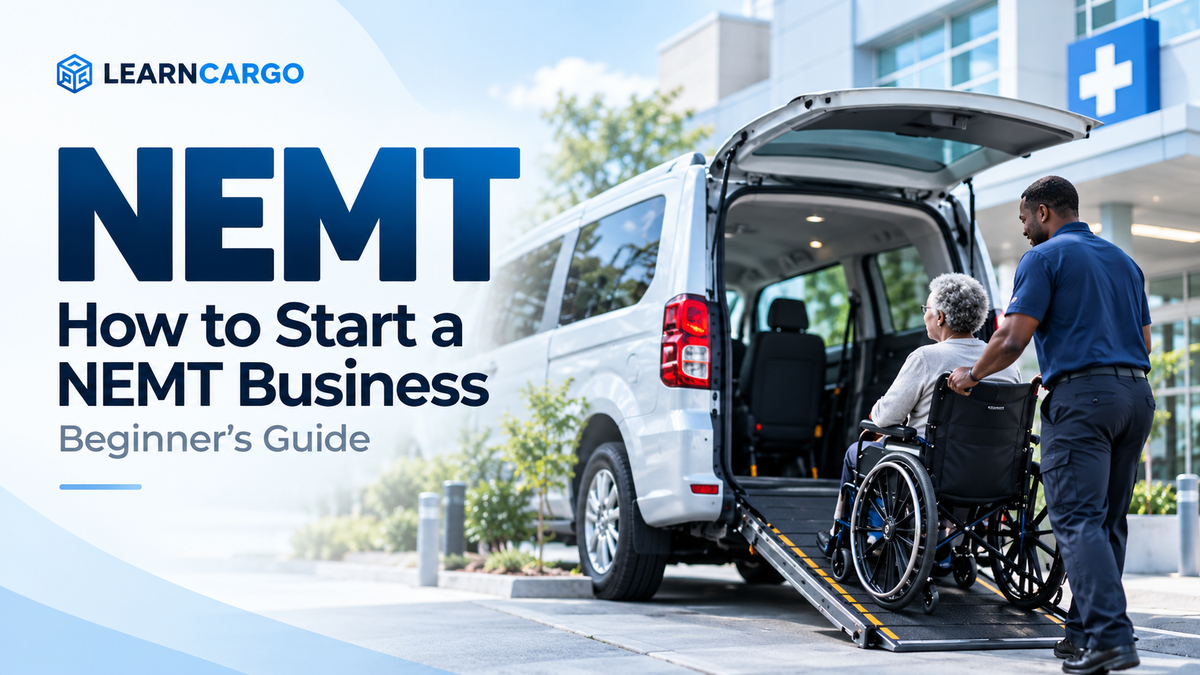
Starting a Non-Emergency Medical Transportation (NEMT) business can be an opportunity for entrepreneurs who want to enter the healthcare transportation industry. As patients continue to need transportation to medical appointments, dialysis centers, rehabilitation facilities, and other healthcare services, dependable transportation providers play an important role in healthcare access.
However, starting a NEMT company involves more than purchasing a vehicle and accepting passengers. Business owners must understand licensing, insurance, vehicle requirements, driver qualifications, transportation contracts, and daily operations.
Whether you’re planning to operate one vehicle or build a transportation fleet, this LearnCargo beginner’s guide will help you understand the essential steps involved in launching a NEMT business.
1. What Is a NEMT Business?
Non-Emergency Medical Transportation provides scheduled transportation for individuals who need assistance traveling to healthcare appointments but do not require emergency ambulance services.
NEMT companies may transport passengers to:
Dialysis treatments
Doctor appointments
Physical therapy sessions
Outpatient surgery centers
Behavioral health appointments
Rehabilitation facilities
Specialist consultations
Some passengers can walk independently, while others require wheelchair-accessible transportation or additional mobility assistance.
NEMT differs from emergency medical transportation because passengers generally do not require emergency medical treatment during transportation.
Before starting, decide which passenger population and transportation services your company will serve.
2. Research Your State’s NEMT Regulations
One of the most important steps in starting a NEMT business is understanding your state’s transportation regulations.
There is no single nationwide licensing procedure that applies equally to every NEMT operator. Requirements vary depending on your state, locality, vehicle type, and transportation services.
You may need:
State or local transportation permits
Business registration and licensing
Commercial vehicle registration
Vehicle safety inspections
Driver background checks
Specialized passenger assistance training
Medicaid provider enrollment or broker credentialing
Some transportation activities may also fall under federal passenger-carrier regulations.
LearnCargo Tip: Research your state’s requirements before purchasing a vehicle. A vehicle that qualifies for one transportation program may not meet another program’s requirements.
Contact your state transportation regulator and Medicaid agency for information applicable to your proposed services.
3. Register Your NEMT Business
After researching your state’s requirements, establish your transportation company legally.
Many entrepreneurs choose to form a Limited Liability Company (LLC), although other business structures may also be appropriate.
Typical startup steps include:
Select a business name.
Register your business with the state.
Apply for an Employer Identification Number (EIN).
Obtain required business licenses.
Open a business bank account.
Establish a bookkeeping system.
You can obtain an EIN directly through the Internal Revenue Service at no cost.
Maintaining separate business finances makes it easier to monitor expenses, file taxes, and evaluate profitability.
You should also research whether your business requires additional registrations, transportation permits, or operating authority before accepting passengers.
4. Choose the Right NEMT Vehicle
Your transportation services will determine what type of vehicle you need.
Common NEMT vehicles include passenger cars, minivans, and wheelchair-accessible vans.
For ambulatory transportation, a qualifying passenger vehicle may be sufficient. Wheelchair transportation typically requires properly equipped accessible vehicles.
Consider the following before purchasing:
Passenger capacity
Vehicle age and mileage
Accessibility requirements
Wheelchair ramps or lifts
Passenger restraint systems
Maintenance expenses
Fuel efficiency
Insurance costs
Purchasing a vehicle before obtaining insurance quotes or confirming contract requirements can create unnecessary financial risk.
For example, some transportation brokers may establish maximum vehicle-age requirements or additional inspection standards.
Beginner Tip: Contact potential transportation brokers before purchasing your vehicle. Ask about their vehicle specifications and provider eligibility requirements.
5. Obtain Commercial Transportation Insurance
Insurance is one of the most important operating expenses for a NEMT business.
Personal automobile insurance should not be assumed to cover commercial passenger transportation.
Depending on your state, services, and contractual obligations, you may need:
Commercial automobile liability insurance
General liability insurance
Workers’ compensation insurance
Additional passenger transportation coverage
Transportation brokers and healthcare organizations may require specific policy limits before approving your company.
Insurance premiums can vary based on location, vehicle type, driving records, coverage limits, and operating history.
Request multiple quotes from insurance professionals experienced in passenger transportation.
Compare the actual coverage and exclusions rather than selecting a policy based entirely on price.
6. Understand Driver Qualifications and Training
Transporting healthcare passengers requires professionalism, reliability, and appropriate safety procedures.
Drivers should understand how to assist passengers, operate vehicle equipment, and respond to transportation-related emergencies.
Depending on the applicable regulations and contracts, training and screening may include:
Criminal background checks
Driving record verification
Defensive driving training
Passenger assistance techniques
Wheelchair securement training
CPR and first aid
Confidentiality and privacy procedures
Drug-related compliance requirements
Training requirements differ among states and transportation programs.
Businesses should maintain organized records of driver qualifications, certifications, training, and required screenings.
Remember that transporting vulnerable passengers involves responsibilities beyond simply driving from one address to another.
7. Learn How Medicaid Transportation Works
Medicaid transportation represents one potential business opportunity in the NEMT industry.
Under applicable Medicaid programs, eligible beneficiaries may receive transportation assistance to covered healthcare services.
Depending on the state, transportation may be coordinated through Medicaid transportation brokers, managed care organizations, or other authorized arrangements.
Transportation brokers help coordinate passenger trips with qualified transportation providers.
Before joining a network, research its:
Credentialing process
Insurance requirements
Vehicle standards
Driver qualifications
Service territories
Trip assignment procedures
Reimbursement structure
Billing requirements
Some networks may limit enrollment based on existing transportation capacity or regional demand.
Important: Forming an LLC or obtaining an EIN does not automatically authorize your business to transport Medicaid beneficiaries.
You must satisfy the appropriate provider enrollment, credentialing, and contracting requirements.
8. Find NEMT Contracts and Customers
Securing consistent transportation work is essential to operating a sustainable NEMT company.
Medicaid transportation networks are one possible source of trips, but additional opportunities may exist.
Potential customers and contracting organizations include:
Medicaid transportation brokers
Managed care organizations
Hospitals and healthcare systems
Rehabilitation facilities
Senior living communities
Community transportation programs
Organizations coordinating veterans’ transportation
Different opportunities have different licensing, insurance, payment, and operational requirements.
Research each organization before submitting a proposal or provider application.
Some healthcare facilities coordinate transportation internally, while others use established transportation networks.
Rather than assuming every facility needs another transportation provider, contact its transportation coordinator or vendor management department to learn about current opportunities.
9. Calculate Your NEMT Startup Costs
Starting a NEMT business requires financial planning.
Your actual investment will depend on the services you offer, the vehicles you purchase, local insurance premiums, and regulatory requirements.
Common startup expenses include:
Business registration and licensing
Vehicle purchase or financing
Commercial insurance deposits
Vehicle inspections
Driver training
Accessibility equipment
Dispatching software
Marketing and administrative expenses
You should also prepare for ongoing expenses, including fuel, repairs, maintenance, payroll, insurance, and taxes.
An essential part of financial planning is understanding your cost per trip and cost per mile.
For example, a transportation company receiving $60 for a trip must account for more than the driver’s time carrying the passenger.
Additional expenses may include travel to the pickup location, unpaid return mileage, fuel, waiting time, and vehicle maintenance.
A profitable business requires understanding total operating costs rather than focusing only on gross revenue.
10. Organize Your Dispatching and Daily Operations
Reliable scheduling is critical in healthcare transportation.
Passengers may depend on your company to arrive on time for treatments and important medical appointments.
Your operating procedures should address:
Trip scheduling
Driver assignments
Route planning
Passenger assistance needs
Pickup and drop-off documentation
Cancellations and no-shows
Vehicle maintenance
Billing and payment reconciliation
Some businesses use transportation management software to organize schedules, track vehicles, and maintain operational records.
When selecting software, consider your budget, business size, reporting requirements, and the needs of your transportation contracts.
Developing clear operating procedures early can make it easier to maintain service quality as your company grows.
11. Avoid Common NEMT Startup Mistakes
New transportation business owners sometimes make expensive decisions before fully understanding the industry.
Common mistakes include:
Purchasing vehicles too early: Confirm regulatory and contract requirements before investing in expensive equipment.
Underestimating insurance: Commercial passenger transportation coverage may represent a substantial monthly expense.
Ignoring unpaid mileage: Driving to pickups and returning between assignments can reduce profitability.
Depending on one contract: Relying entirely on a single customer or broker can create financial risk if trip volume changes.
Expanding too quickly: Additional vehicles increase expenses even when transportation demand is inconsistent.
Successful NEMT operations require careful planning, accurate financial records, and realistic expectations.
12. Build a Sustainable NEMT Business
Starting with one vehicle can provide an opportunity to understand the operational and financial responsibilities of the industry before expanding.
As your business develops, monitor important performance indicators such as:
Monthly revenue
Operating cost per vehicle
Completed transportation trips
On-time pickup performance
Maintenance expenses
Driver productivity
Customer satisfaction
These measurements can help you identify operational problems and evaluate future growth opportunities.
Expanding your transportation business should be based on consistent demand, available capital, and your ability to maintain safe, reliable service.
Frequently Asked Questions
Can I start a NEMT business with one vehicle?
Yes, it may be possible to operate with one qualifying vehicle, depending on state regulations and contract requirements.
Do I need a wheelchair-accessible van?
Not necessarily. Vehicle requirements depend on whether you provide ambulatory transportation, wheelchair transportation, or other services.
Do I need an LLC to start a NEMT company?
An LLC is a common business structure, but it is not universally required. Review your state’s business and transportation regulations.
How do NEMT businesses get paid?
Payment arrangements vary. Depending on their contracts, providers may receive payment through transportation brokers, healthcare organizations, government programs, or private customers.
Final Thoughts: Starting a NEMT Business
Starting a Non-Emergency Medical Transportation business can provide an opportunity to build a company serving an important healthcare need.
However, success requires preparation, compliance, responsible financial management, and dependable operations.
Before investing in vehicles or hiring drivers, research your market, understand state requirements, evaluate potential contracts, and develop a realistic business budget.
Continue exploring our educational resources and YouTube tutorials to learn more about building a transportation business.
Disclaimer: This article provides general educational information. Transportation regulations, Medicaid requirements, and contract standards vary by jurisdiction and may change. Always verify current requirements with the appropriate agencies and transportation organizations.

2 thoughts on “How To Start an NEMT Business”